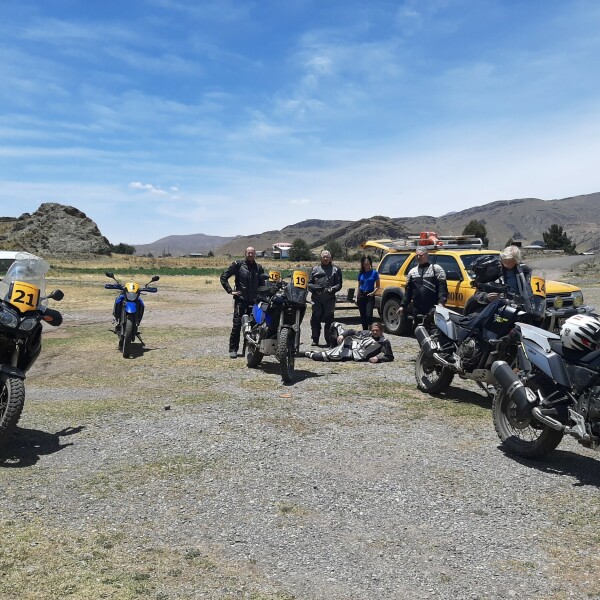
The group dynamics on the motorcycle trip through Peru were crucial, especially when crossing the high Andes and on the challenging routes around the...
OVERVIEW
Listen to audio tour
0:00
0:00
Motorcycle trip through Peru - Machu Picchu and the Incas
Our motorcycle tour starts in Lima, Peru and takes us to incredible places like the Huacachina Oasis, the Nazca Lines, the Puerto Inca Bay, the Colca Canyon, Lake Titicaca, the Inca capital Cusco, and the ancient wonder Machu Picchu. In total, we will cover 3,165 kilometers along beautiful and adventurous routes in the High Andes. The daily stages are well planned and adapted to the driving distances. Today, Peru is one of the most sought-after countries in South America for motorcycle travel. Are you ready for your Machu Picchu motorcycle trip?
Motorcycle trip through Peru
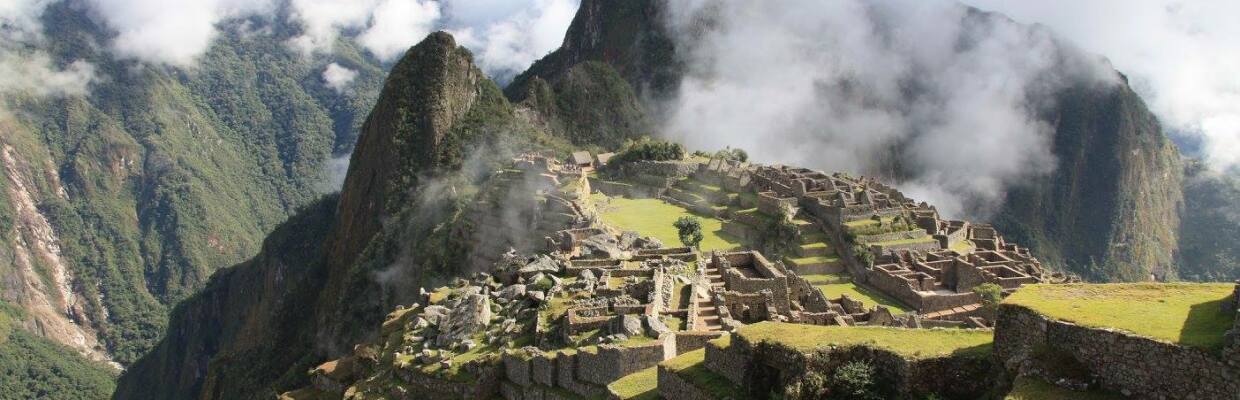
This motorcycle trip through Peru takes you over the Andes passes to the UNESCO World Heritage site Machu Picchu. Machu Picchu is one of the most famous ruined cities in South America and a must for every visitor to Peru. Built in the 15th century by the Incas on a mountain ridge at an altitude of 2,360 meters, Machu Picchu is the ultimate symbol of Peruvian culture. In the Sacred Valley, we visit various historical sites of Inca culture. Off the beaten paths, we ride through the high Andes and visit cities like Abancay, Andahuaylas, and Ayacucho before returning to the coast. The many curves and elevation changes as well as the breathtaking views make the route varied and a paradise for motorcyclists. Before returning to Lima, we stop in Paracas and visit the national park and the Ballestas Islands, which remind many visitors of the Galapagos Islands. There, we can observe a variety of animals such as sea lions, penguins, and numerous seabirds. On the way to Nazca, we take the famous Panamericana and enjoy the stunning view of the Andean horizon. Lake Titicaca, a place of great significance for Inca culture, is, of course, a must on this motorcycle tour. These are just the highlights of this tour; get ready for a real South America experience!
Important:
Machu Picchu; city tour of Lima; boat tour of the Uros Islands; boat tour of the Ballestas Islands as well as the flight over the Nazca Lines are optional and to be paid on site. These activities are always to be paid on site and do not belong to the services!
Daily program: Panamericana, Nazca, Machu Picchu and more!
Day 1: Arrival in Lima
After our arrival at Jorge Chavez International Airport in Lima, we will be taken to our hotel in the Miraflores district.
Day 2: City tour in Lima
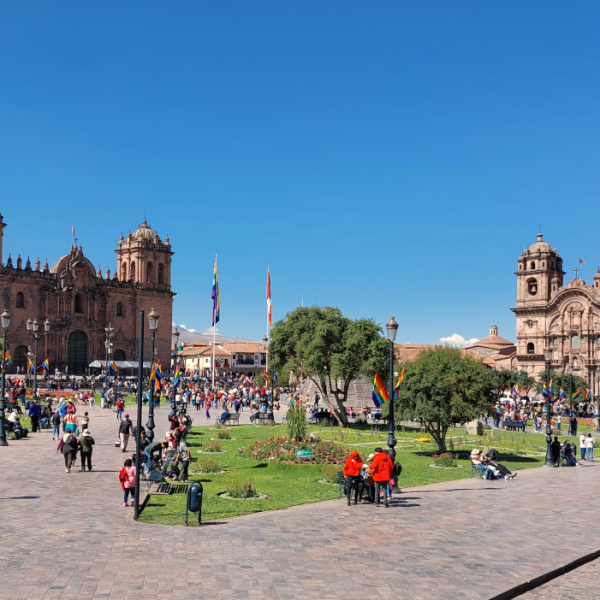
Today we embark on a journey of discovery through Lima, the capital of Peru, which is also known as the 'City of Kings.' The tour* first takes us to the historic old town, an area that has been declared a UNESCO World Heritage Site due to its architectural and cultural significance. Here we will visit, among other things, the Plaza de Armas, the central square of the city, surrounded by magnificent colonial buildings, and the Presidential Palace, which not only serves as the official residence of the head of state but also represents an outstanding example of magnificent colonial architecture.
*Admission not included in the price / to be paid on site.
Day 3: Lima to Ica
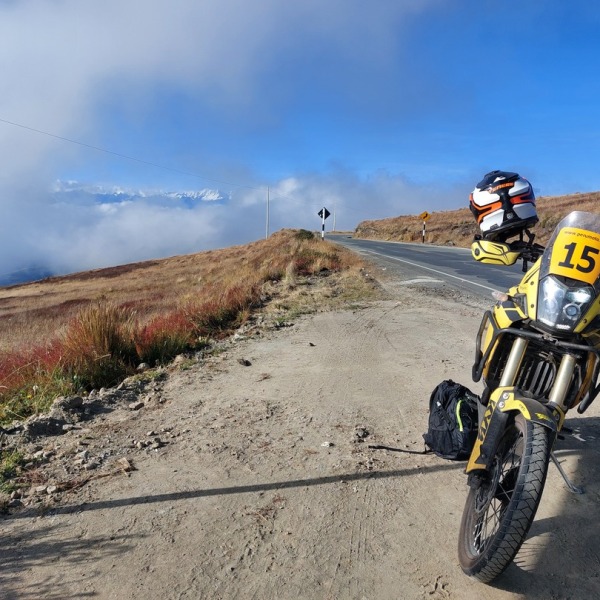
Our first motorcycle stage takes us south along the famous Panamericana to our daily destination, the city of Ica. The stage of about 300 kilometers offers a great view of the Pacific coast, the endless sand dunes that rise majestically against the clear sky, and the green oases that sparkle like jewels in the desert. After this exciting ride, we reach the oasis of Huacachina. This idyllic oasis is a true paradise in the midst of the desert. Huacachina is known for its picturesque lagoon, surrounded by palm trees, and for the gigantic dunes that attract adventurers and nature lovers alike.
Day 4: Panamericana to Nazca
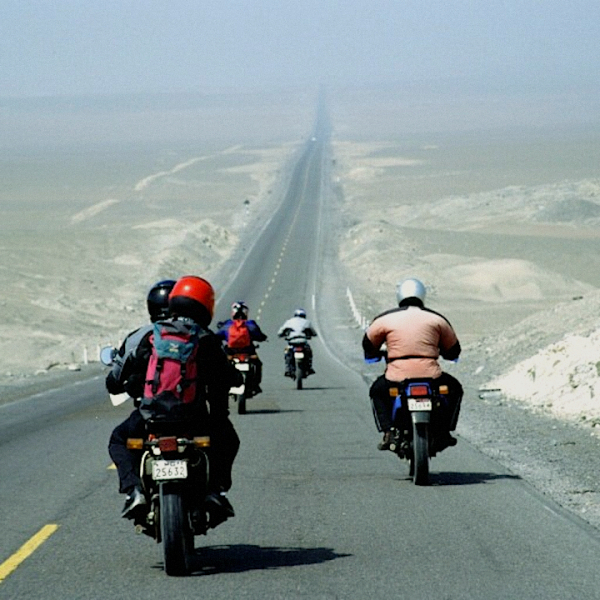
On the famous Pan-American highway, we continue our journey south - accompanied by endless rows of sun-kissed grapevines. After about 150 kilometers, we reach the legendary city of Nazca.
Day 5: By airplane over the Nazca Lines
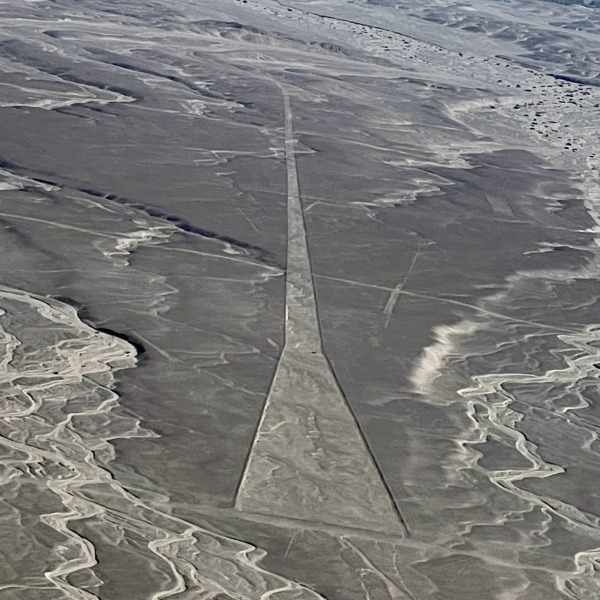
Today we take a break on our motorcycle tour, and we have the opportunity to fly over the Nazca Lines in a small airplane*. Only from a great height are the gigantic, stylized drawings, including a monkey, a fish, a spider, a hummingbird, and numerous geometric shapes, clearly visible. *The flight is not included in the travel price.
Day 6: Puerto Inka
After a drive of 165 kilometers, we reach the bay of Puerto Inka, a place where penguins, pelicans, and sea lions are at home in the midst of unspoiled nature.
Day 7: Camaná
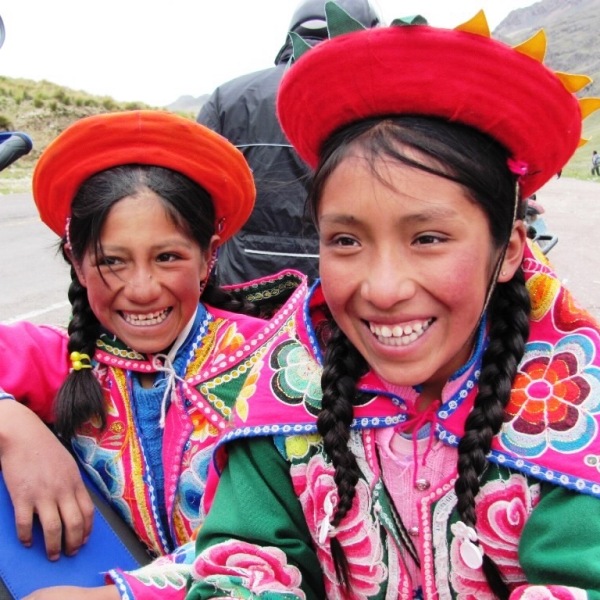
Today we will travel around 230 kilometers further to Camaná. The route takes us along the rather rugged coast, where many people make their living from fishing or from the extraction of raw materials such as silver, copper, and gold. And in the fertile river valleys of the Andes, you can often see small fields and agriculture ;)
Day 8: Colca Canyon
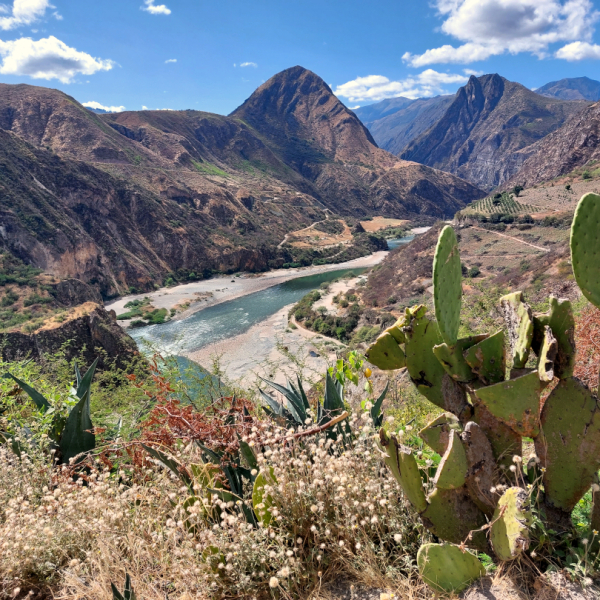
We leave the coast and set off towards the Colca Canyon. After 90 km of paved road, a 210 km long off-road route through unspoiled nature awaits us. The Colca Canyon is considered the third deepest gorge in the world and offers us the unique opportunity to observe the majestic condor in its natural habitat. We will spend the night in Chivay, at an altitude of 3635 meters above sea level.
Day 9: Lake Titicaca
We set off for Puno at Lake Titicaca. From Chivay, the road climbs until we reach the Pata Pampa pass at 4890 meters. The distance is about 300 km, of which 60 km is on gravel roads. Along the way, we cross the vast pampas with their mountain lakes and encounter vicuñas, llamas, and alpacas :D
Day 10: Uros Islands
Today we visit the Uros Islands*, these cool floating reed islands, and also Taquile Island on Lake Titicaca. The lake is at an impressive 3812 meters above sea level and is four times larger than Lake Constance! With a maximum depth of 281 meters and a length of 190 kilometers, Lake Titicaca is truly an impressive natural wonder!
**Admission not included in the prices/ to be paid on-site.
Day 11: Cusco
Let's go! Today, 380 kilometers to Cusco are on the agenda, the old Inca capital, which is also known as the 'navel of the world.' The city is located at an altitude of 3,326 meters and has a lot of history to offer. No wonder it is one of the most popular travel destinations in all of South America.
Day 12: Aguas Calientes to Machu Picchu!!
Today is the day, we're finally on our way to Machu Picchu! First, we take the bus to Ollantaytambo, and from there we continue by train to Aguas Calientes. In total, it's about 180 kilometers. We will spend the night in a hotel in Aguas Calientes*. By the way, the Incas built Machu Picchu in the 15th century on a ridge at an altitude of 2,360 meters, nestled between Huayna Picchu and Machu Picchu. Really impressive!
*Entrance/hotel booking not included in the price/to be paid on site.
Day 13: Machu Picchu (Optional activity to be paid on site)
Our early arrival in Aguas Calientes pays off: We are among the first to depart by bus to Machu Picchu today. The itinerary from the office in Cusco reveals what is planned for us. Anyone can see Machu Picchu, but have you ever thought about experiencing it during your motorcycle tour? That is precisely the purpose of our Peru motorcycle tours!
*Admission not included in the price / to be paid on site.
Day 14: Salt ponds
With the motorcycles, we take a trip through the Sacred Valley of the Incas, known for its historical sites and magnificent landscapes. We visit the salt mines of the Incas, where salt has been traditionally extracted for centuries. The terraced salt basins create a fascinating contrast against the backdrop of the surrounding mountains. After this impressive visit, we enjoy a delicious lunch in Pisac, a place known for its colorful market and well-preserved Inca ruins.
Day 15: Cusco
In Cusco we have the day at our disposal. The city at the center of the world offers a variety of attractions. Everyone can decide according to their preferences which museums and churches they would like to visit. Particularly popular are the restaurants around the Plaza, ideal for a relaxed break and to observe the hustle and bustle of the city.
Day 16: Abancay to Andahuaylas
Today we set off on the way over Abancay to Andahuaylas. It is situated at an altitude of 2,900 meters in the valley of the Río Chumba. The route there is challenging with many curves, constant ups and downs, and changing climates. After about 340 kilometers, we finally reach Andahuaylas, our destination for today.
Day 17: Ayacucho
In the Greater Ayacucho area, around 220,000 people live, with about 100,000 in the city itself. Ayacucho, also known as Huamanga, is located at an altitude of 2,760 meters. The 240-kilometer route there takes us through the Andes, far away from the usual tourist trails, and offers a truly authentic Peru experience.
Day 18: Pass Abra Apacheta-Panamericana
From Ayacucho, we head back down towards the coast. Along the way, we cross the Abra Apacheta, a pass at a lofty 4,746 meters, quite airy up there! After that, the road winds back to the Pan-American Highway in many curves. After about 360 kilometers, we finally reach our destination: the laid-back coastal town of Paracas.
Day 19: Ballestas Islands
Today, the Ballestas Islands and the National Park of Paracas are on the agenda. The Ballestas Islands are also referred to as 'Little Galapagos' and are home to sea lions, penguins, and many seabirds. We will already depart at 8:00 AM with speedboats to the islands. In the afternoon, we will continue with our motorcycles to explore the National Park of Paracas.**Entrance not included in the prices / to be paid on site.
Day 20: Back to Lima
We are on our way to Lima, about 230 kilometers away. In the evening, we review the tour once again and reflect on all that we've experienced. Our motorcycle tour ends here!
Day 21: Lima
In Lima we have time for ourselves to explore the city according to our own ideas!
Day 22: Return flight to Europe
Transfer to the airport and return flight to Europe.
×
![]()
What riders say about Motorcycle tours in Peru
PRICE
from€6429.00 / person✓ Trip includes
✕ Trip does not include
- Rental motorcycle (self-drive/KOVE 500 X included in base price)
- Fully comprehensive insurance included with any selected rental machine
- English-speaking tour guide
- Support vehicle for luggage
- Overnight stay in selected hotels
HIGHLIGHTS
Adventure in the Highlands of the Andes:
Experience an exciting motorcycle tour through the impressive landscapes of the Andes.
Nazca Lines from the Air:
Optional flight over the mysterious Nazca Lines for spectacular views.
Discover Lake Titicaca:
Visit the highest navigable lake in the world, known for its culture and beauty.
Colca Canyon: Natural Wonder:
Observe majestic condors in the third deepest canyon in the world.
Machu Picchu: Inca culture up close:
Experience the UNESCO World Heritage Site Machu Picchu, a unique archaeological masterpiece. These impressive ruins, built on a ridge, are a highlight of Inca heritage and surrounded by breathtaking views. The journey is along great roads and picturesque landscapes that reflect authentic Peru. Let yourself be enchanted by the mystical atmosphere of Machu Picchu!